Honey mustard
Sharp and sweet. Cuts the oil on the crust without hiding the breading.
Kitchen hours
Monday – Sunday: 11:00 AM – 9:00 PM
+1-217-555-0198452 Maple Avenue, Springfield, IL 62704
Smils Chikenes Kitchen · Chicken Tenders Recipes
A working guide from trimming to serving: a buttermilk chicken tenders soak, a crispy breading recipe that holds, and skillet steps that keep boneless chicken strips juicy inside.
Nothing here needs a special pan or a restaurant supplier. This is the sequence a home stove actually walks, in order, with the reason each step exists standing beside it.
Tenderloins if you can find them, otherwise boneless breast sliced into even strips about 3/4 inch thick. Even size matters more than brand.
Pat dry, trim the thin white tendon if it bothers you. Uneven strips mean some pieces dry out while others stay pale.
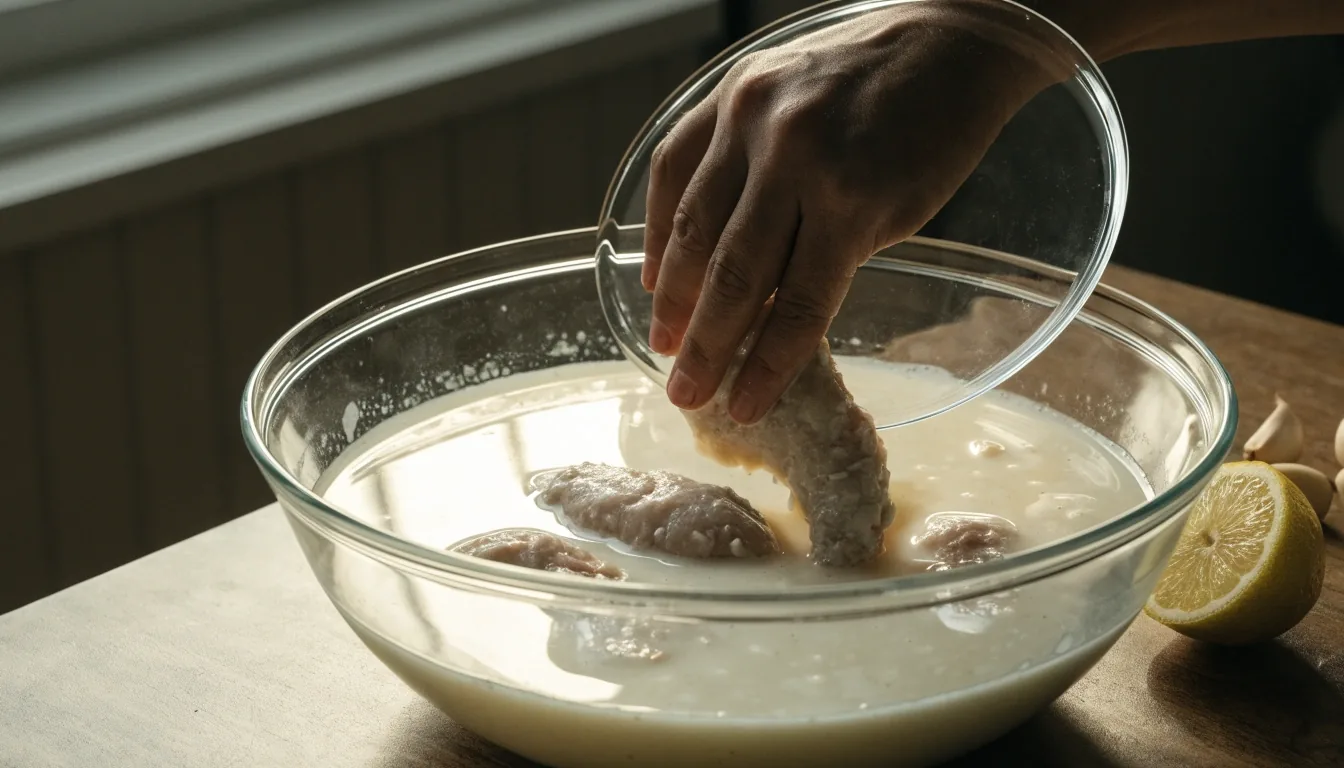
Combine buttermilk, salt, pepper, garlic powder and paprika. That buttermilk-drenched soak tenderizes lightly and gives the flour something to grip.
Thirty minutes on a busy night; two to four hours in the fridge gives deeper seasoning. Drain well, do not rinse.
All-purpose flour with a spoonful of cornstarch, salt, black pepper, paprika, garlic powder, and a pinch of cayenne if you like heat. Dredge damp chicken, dip in beaten egg, dredge again lightly.
Thick clumps look good raw and fall off in oil. Keep the coat thin and craggy, then shake off the extra.
Neutral oil at about 350 to 365 F in a heavy pan with at least an inch of oil. Lay strips away from you, leave space, cook 3 to 5 minutes per side until deep golden and 165 F inside.
If the breading darkens too fast, lower the heat and wait two minutes before the next batch.
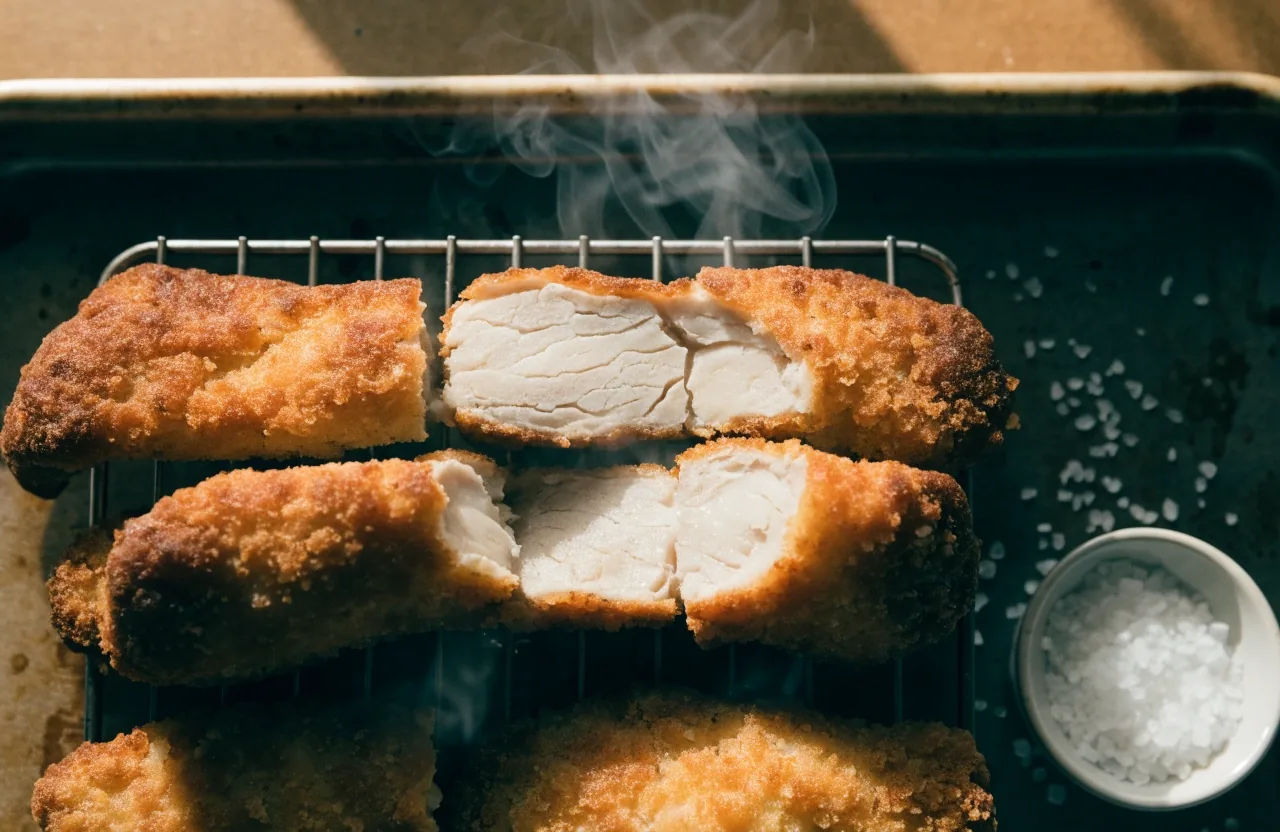
A rack, not paper towels, keeps air under the crust. Serve sauces on the side for dipping instead of pouring over. Uncovered in a warm oven holds them up to 15 minutes.
Covering traps steam and softens that hand-breaded edge.
One hand stays dry, one hand stays wet. Keep the dry bowl on the left, the egg in the middle, the flour coating on the right, and let the breaded strips rest on a rack for ten minutes before they meet the oil. That rest is what keeps the coating attached when the bubbles start.
Bowl one
Seasoned flour with cornstarch. Dry hand only.
Bowl two
Beaten egg. Wet hand only, this is the sticky one.
Bowl three
Flour again, lightly. Press the crags in, then shake off.
The rack
Ten minutes rest on wire so the coating sets before frying.
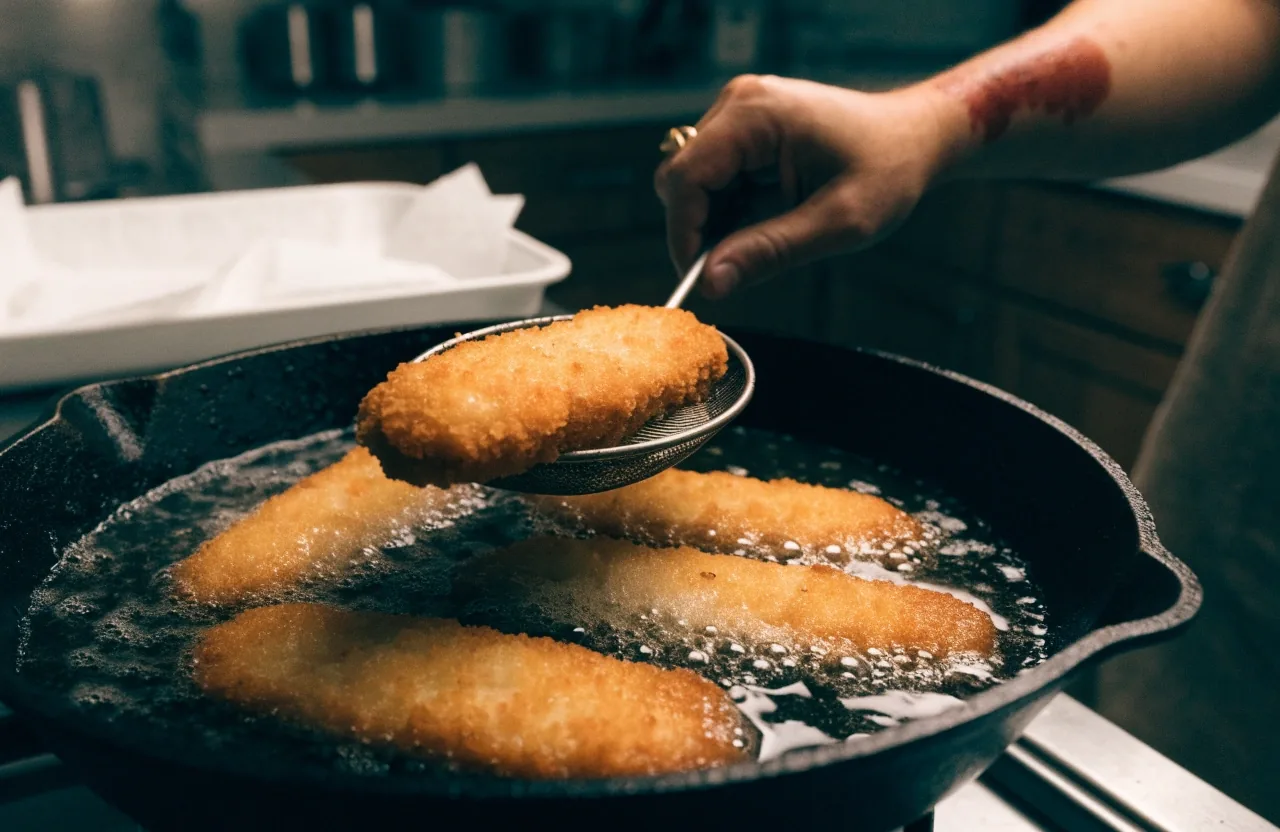
A steady, lively bubble ring around each strip means the temperature is holding. A furious boil means it is too hot and the outside will darken before the center reaches 165 F. Almost no bubbles means the oil cooled down, and that is the batch that drinks grease. Pull a strip, check the colour, and adjust before the next three go in.
You want the deep, uneven gold of something that was breaded by hand, not the flat brown of a factory strip. If it is pale, it needed another minute. If it is mahogany at the edges, it sat twenty seconds too long.
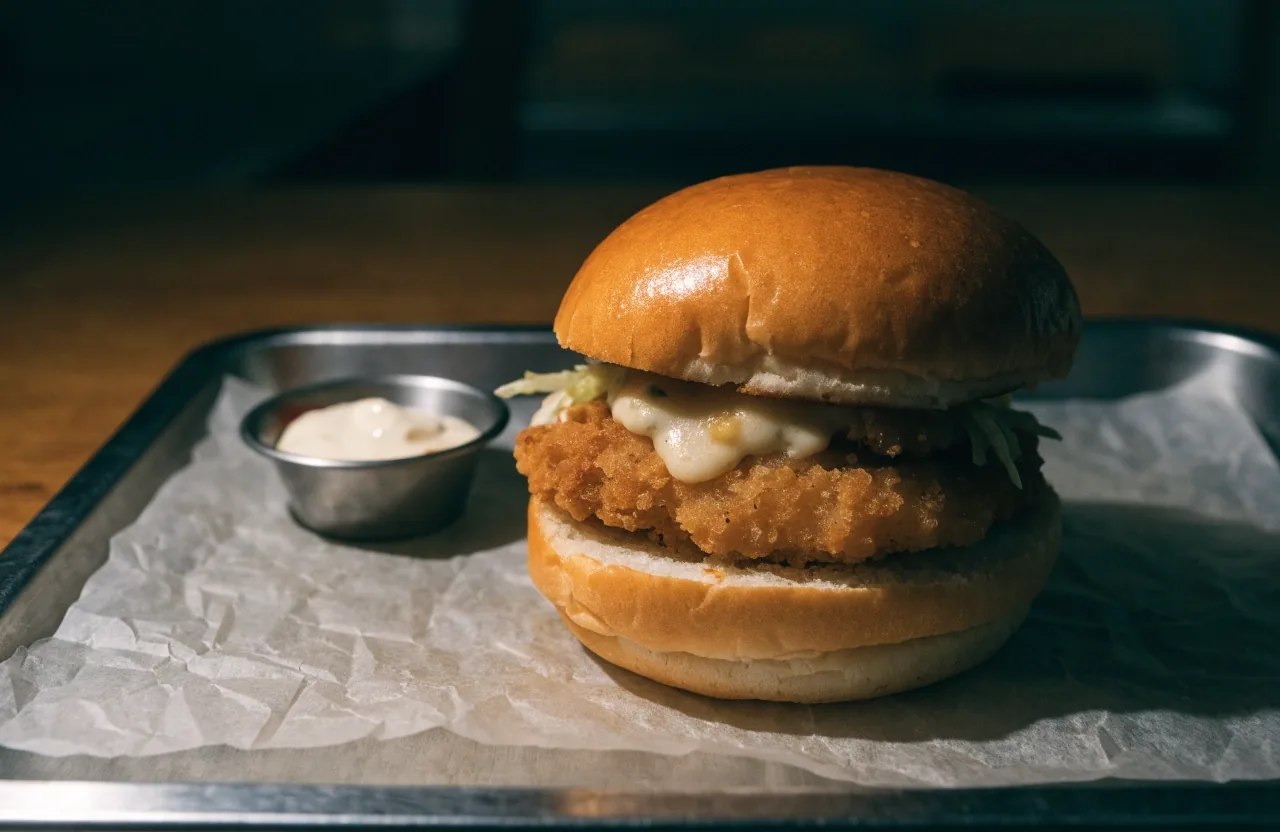
A tenders recipe and a chicken burger are the same cook, one step apart. Once your breading holds on a skillet, the burger is about the build: a hot toasted bun, one sauce underneath to protect the bottom half, and the crisp tenders on top so they stay crisp instead of steaming against the lid.
Flatten the coating a little on the tenders you plan to sandwich so the bite stays even, and keep the house sauce to the side for dipping unless you commit to eating the thing over the tray.
Keep them in small ramekins so the plate stays dry underneath. The warmth of the tender is what wakes each one up, so dip while hot rather than twenty minutes later.
Sharp and sweet. Cuts the oil on the crust without hiding the breading.
Cool and herby. The tenderloin original, and the one picky kids keep asking for.
Sticky, warm, a little sting. Great with the pinch of cayenne in your breading.
Tangy and peppery. Named because you reach for it twice before you finish the plate.
Flaky salt on the tender, no sauce at all. The honest test of whether your breading worked.
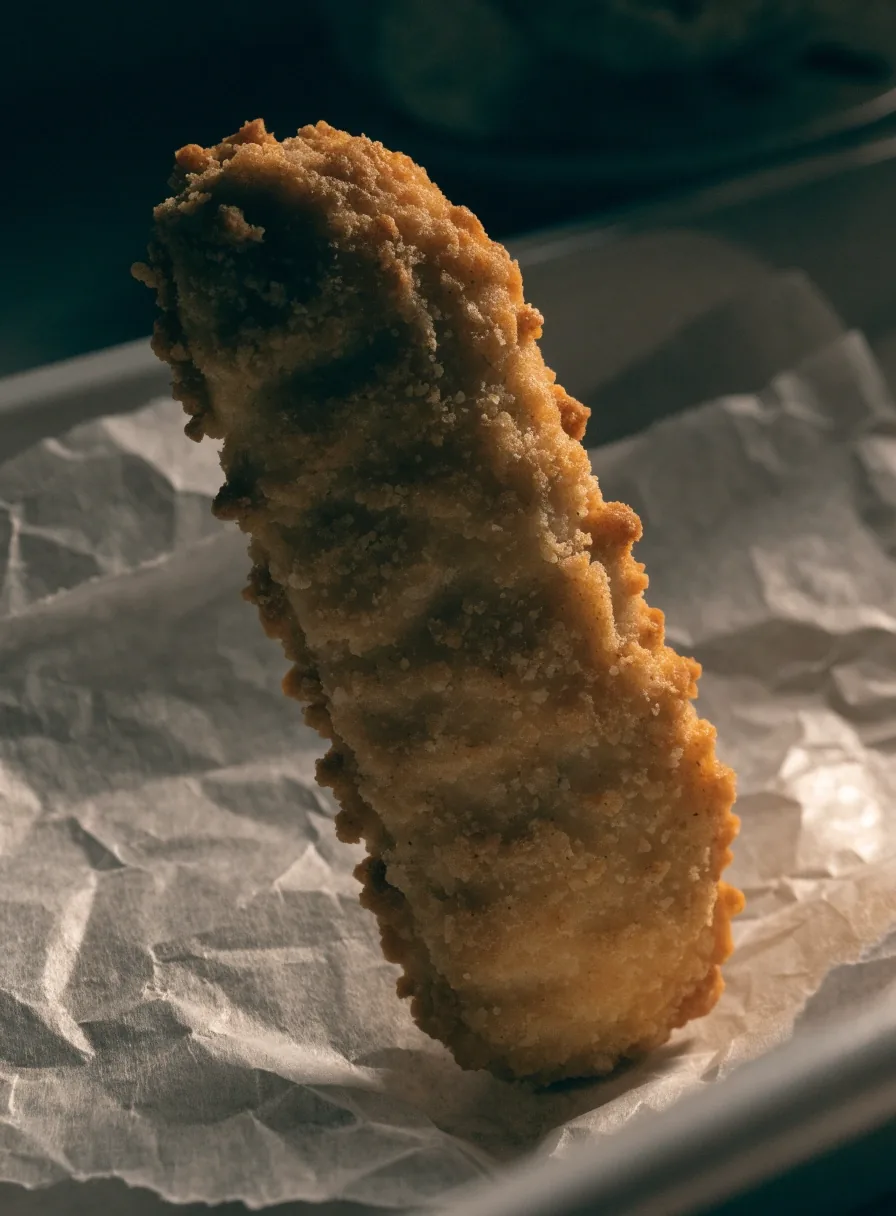
Hand-breaded chicken shows texture variation and a looser crunch. Regular breaded or pre-formed strips eat more uniform and dense, which is their appeal if you want the same bite every time. At home, hand-breading gives you control over salt and thickness, and it pairs better with a house sauce because the crags catch it.
If you want a smoother bite for wraps or mac bowls with chopped tenders, press the coating flatter before frying. It will not shatter the same way, but it slices clean.
Breading falls off? You skipped the rest or the chicken was too wet going into the flour. Greasy crust? The oil was too cool or the pan was crowded, and both of those show up as the same complaint at the table. Bland center? A short soak and unsalted chicken.
Write down your oil temp and your timing once, then repeat. Consistency beats new seasoning blends, and one sheet pan of notes will teach you more than five new recipes.
The last light of the day version
Finish a batch on a wire rack over a sheet pan, dust with flaky salt, and let the tray sit on the counter for three minutes before anyone touches it. The crust sets, the steam leaves, and the tenders eat the way they should: crisp outside, juicy inside, no foil in sight.
If your question is not here, the fastest answer is to write down what you did and try again with one change at a time. Breading responds to method more than it does to new ingredients.
Hot oil, thin coating, space in the pan, and draining on a rack. Serve sauce on the side and avoid covering the plate.
Hand-breaded tenders have uneven, craggy crunch from manual dredging. Regular breaded tenders are more uniform and dense. Every step above — the soak, the thin coat, the rest — is what pushes a home batch toward the first.
Yes. Spray breaded strips lightly with oil and bake on a rack at 425 F until 165 F inside. The crust will be lighter and less shattery than skillet-fried, so lean harder on seasoning in the flour.
Tell us what happened — crumbs in the oil, pale centers, a coating that slid off — and we will point at the step that did it. There is no sales counter here; this site is a cook's station, and the answers are the product.